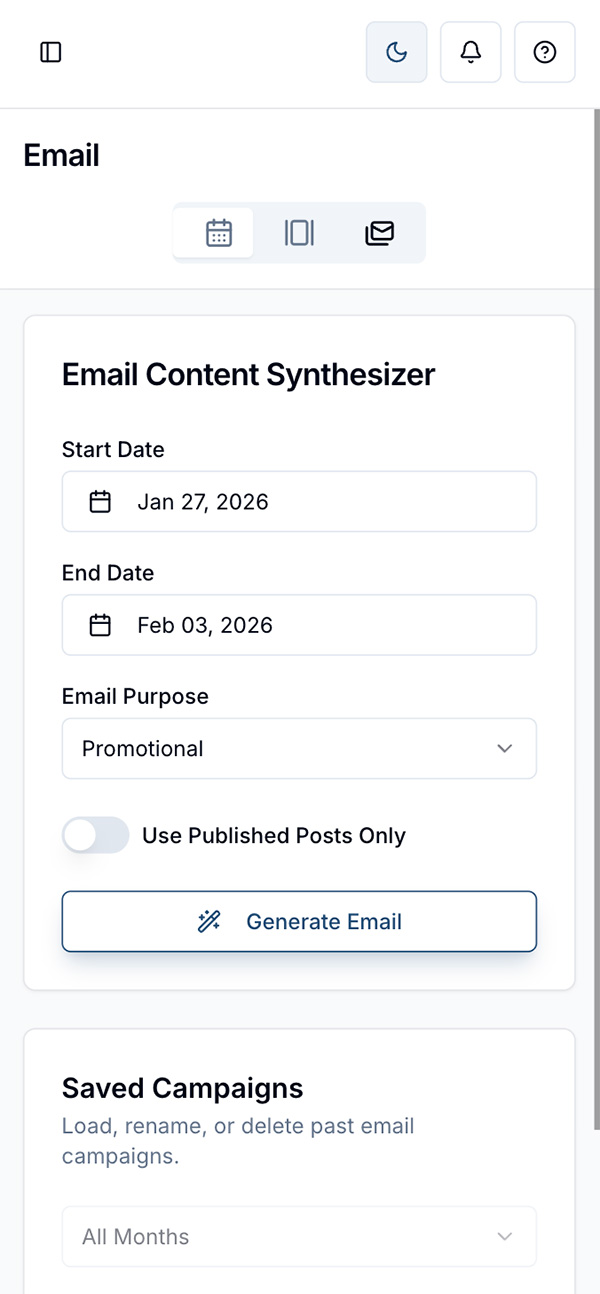
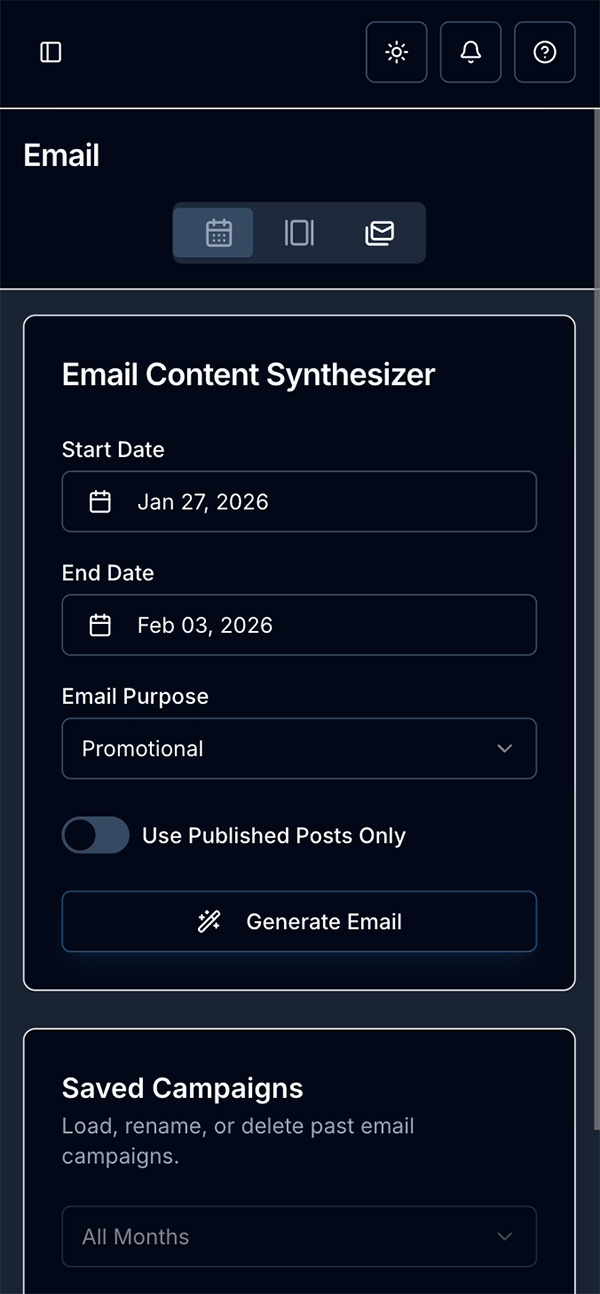
Postandi is a content planning platform that helps small businesses and creators generate, organize, and repurpose marketing content from a single workspace. The product combines AI-assisted creation with a visual planning system to reduce workflow friction and eliminate tool fragmentation.
I led the product design and front-end implementation, defining the core experience from early concept through a functional prototype. My focus was building scalable UX architecture, intuitive planning workflows, and AI-assisted systems that adapt to real user feedback.
The Problem
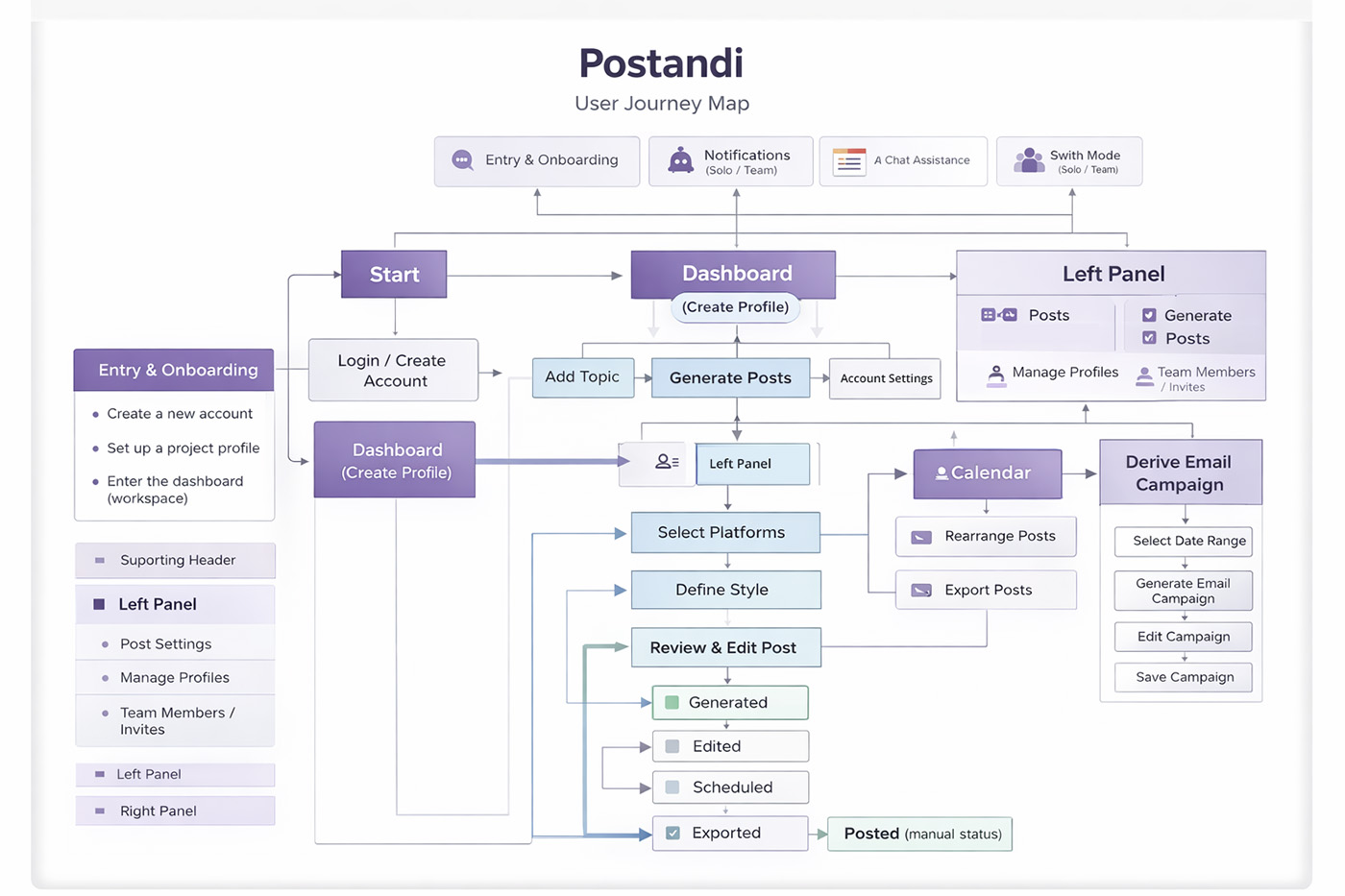
User Journey Map
This results in wasted time, inconsistent brand voice, and limited visibility across content timelines.
Small teams and solo marketers struggle with fragmented workflows
Content ideas live in notes
Captions are written manually
Calendars are disconnected
Repurposing requires repeating work
Product Goals
Enable batch content planning instead of single-post workflows
Maintain consistent brand voice across generations
Support visual scheduling and rescheduling
Allow content reuse across channels
Scale from solo creators to small teams
Core Architecture
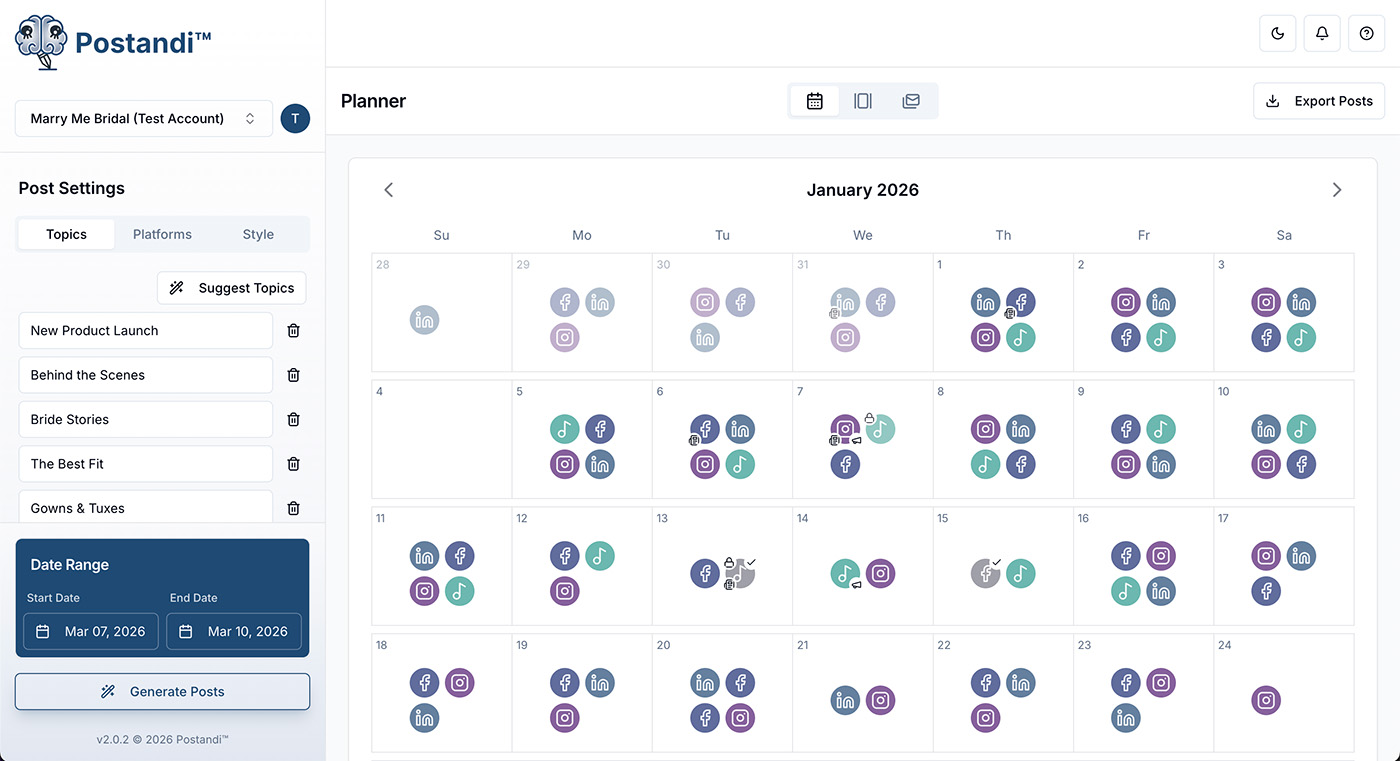
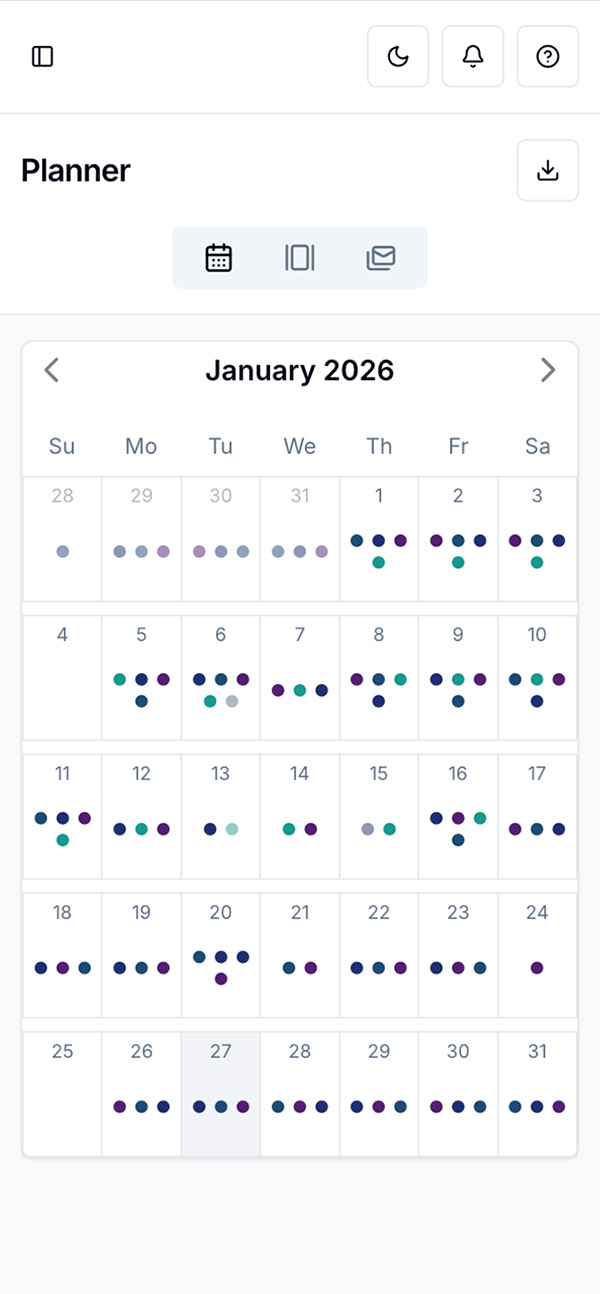
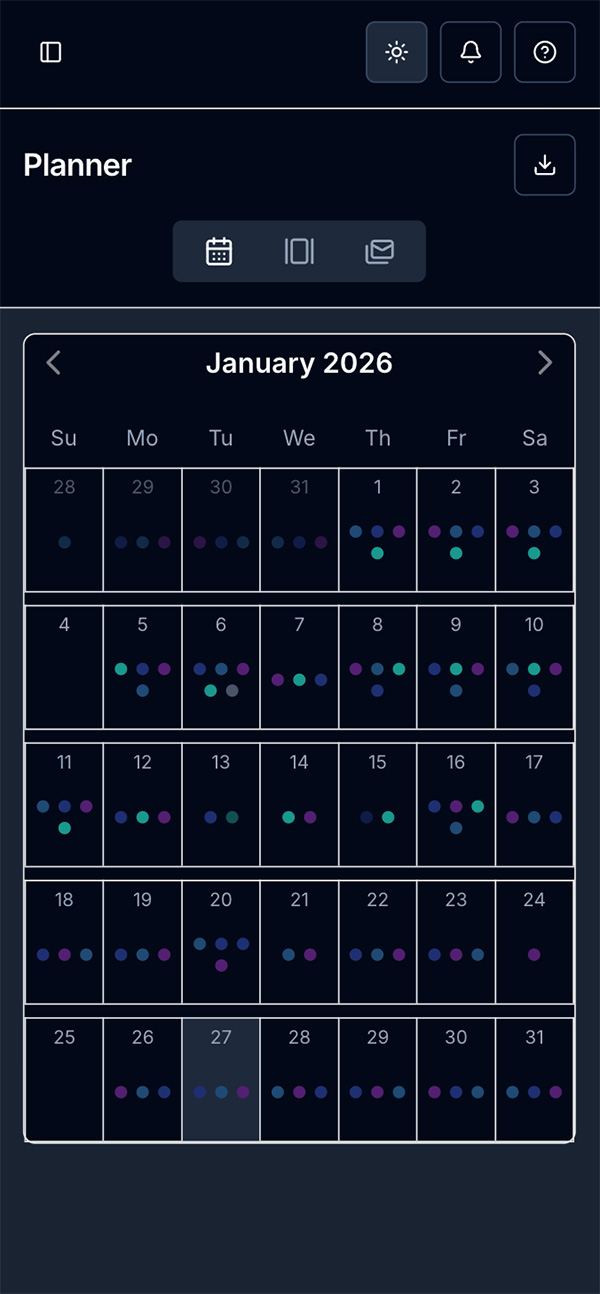
Planner: Active Content Workspace
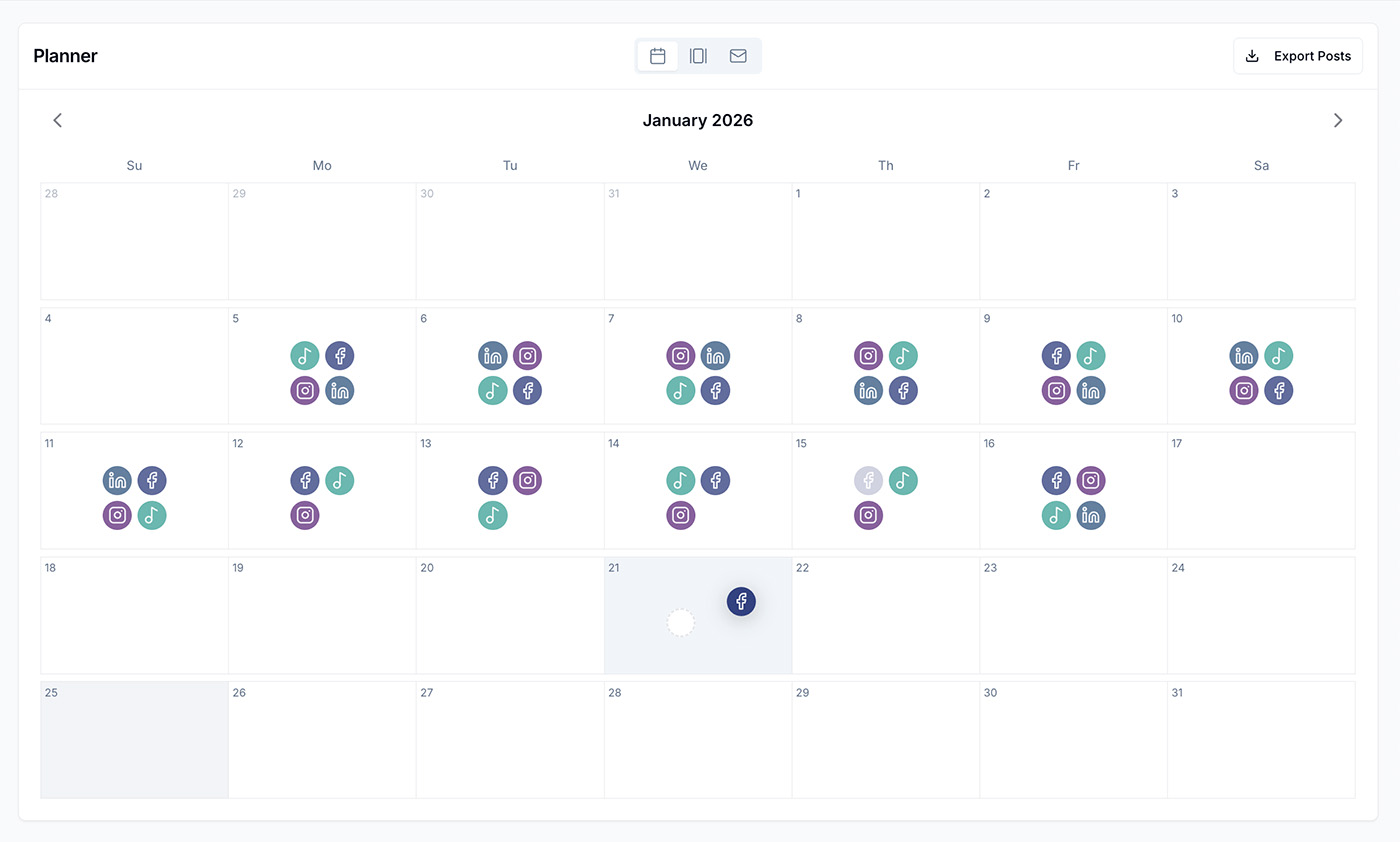
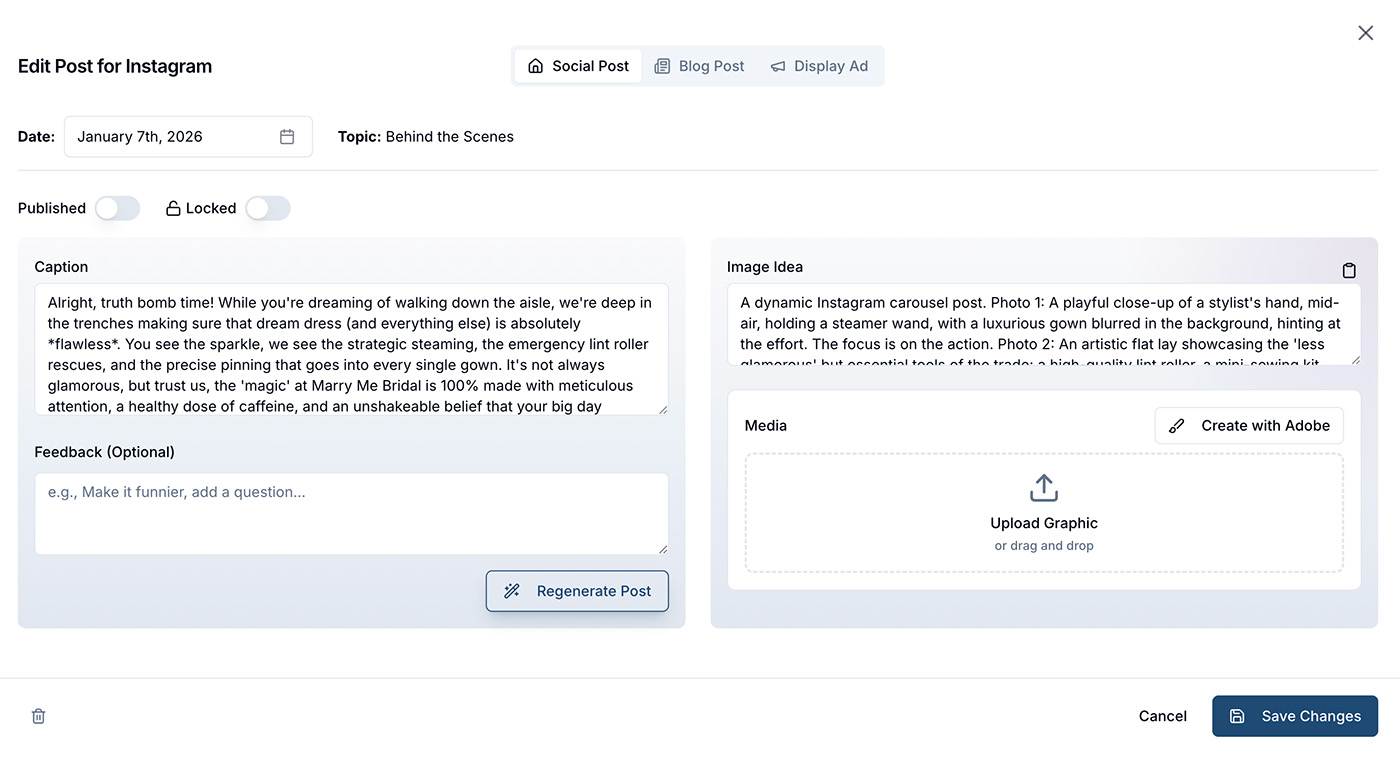
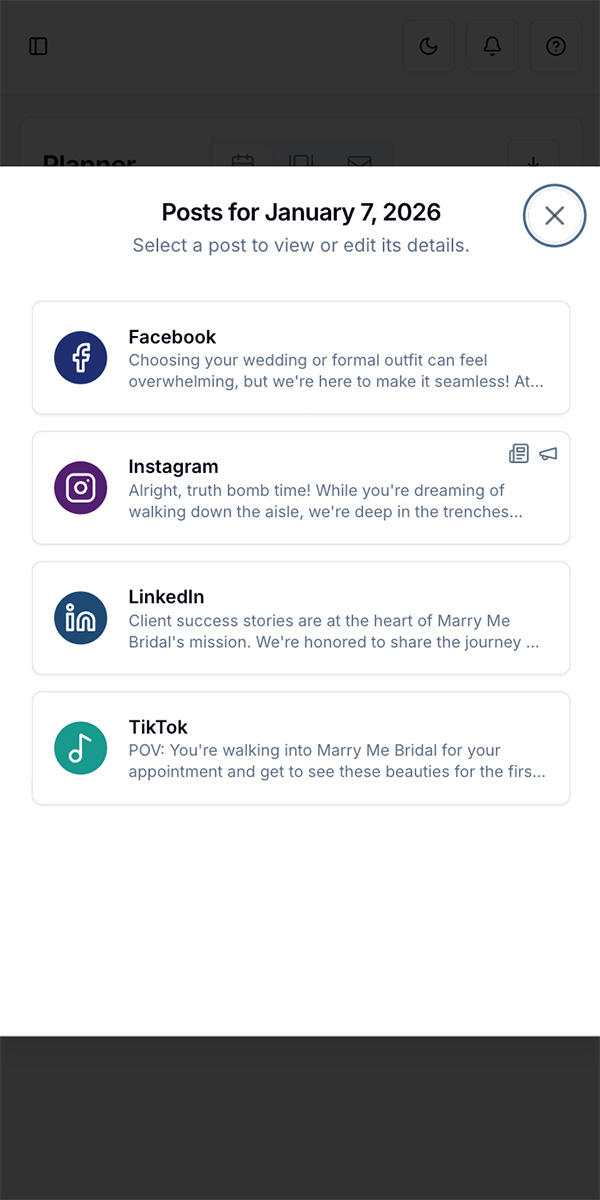
The Planner is the primary production environment. It allows users to visually organize content, drag and drop posts across dates, and edit or regenerate content directly from the calendar.
Highlight behaviors:
Drag to reschedule
Click to edit
Visual platform indicators
Publishing status states
Planner UI
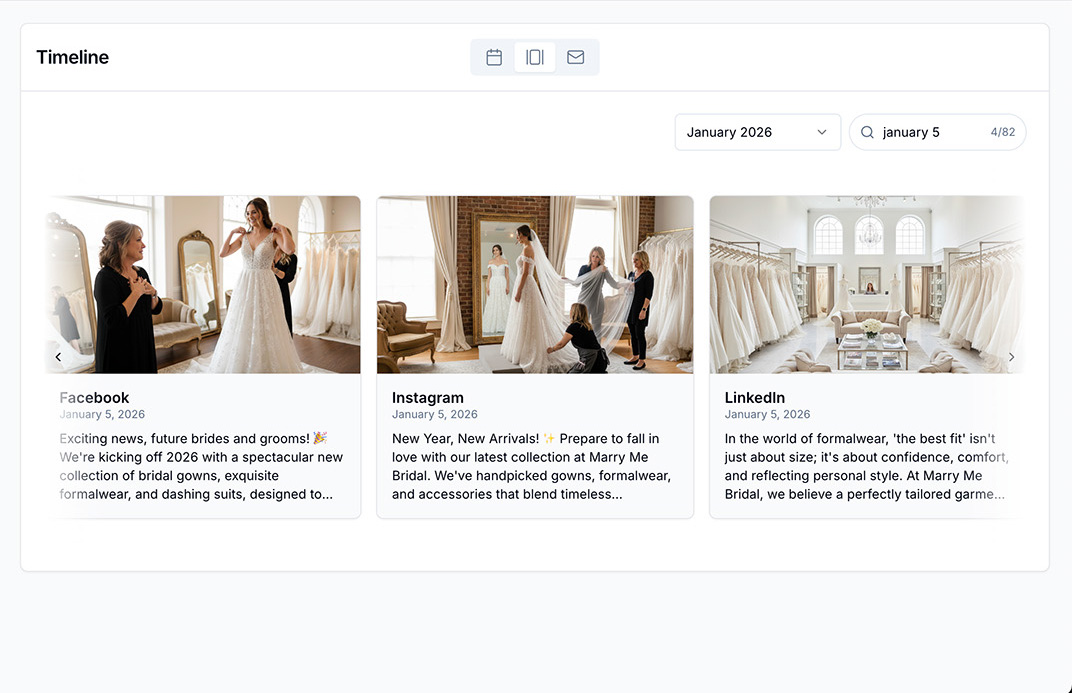
Timeline UI
Timeline: Content Browsing Experience
To reduce cognitive load, I separated active planning from browsing. The Timeline view presents posts in a chronological carousel format, allowing faster scanning and easier navigation across large content sets.
AI Workflow Design
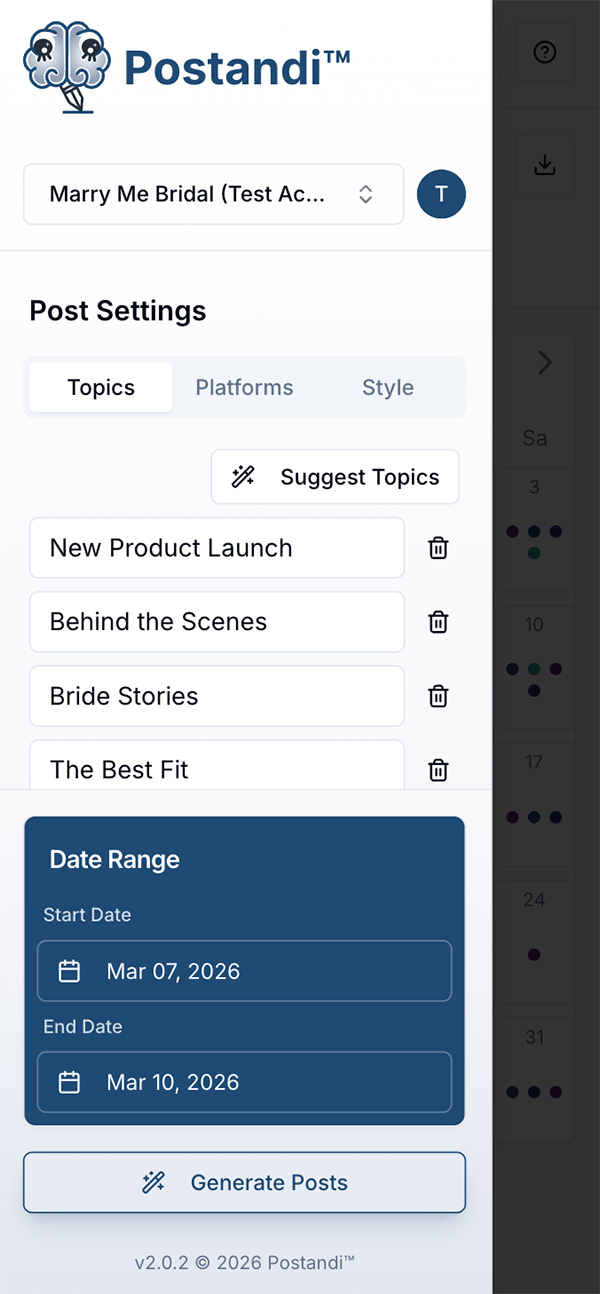
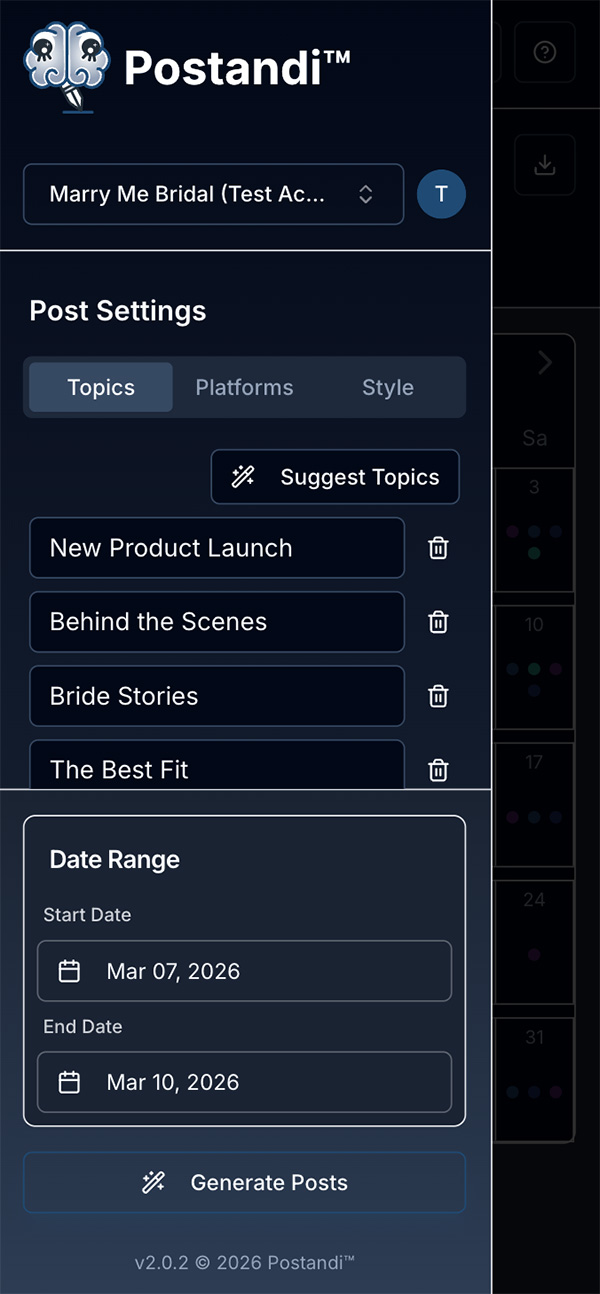
Instead of treating AI generation as isolated prompts, I designed Postandi’s system to accumulate brand context over time. The AI references business profiles, style settings, prior posts, and regeneration feedback to continuously improve output consistency.
This created a human-in-the-loop system where users actively shape brand voice through iteration.
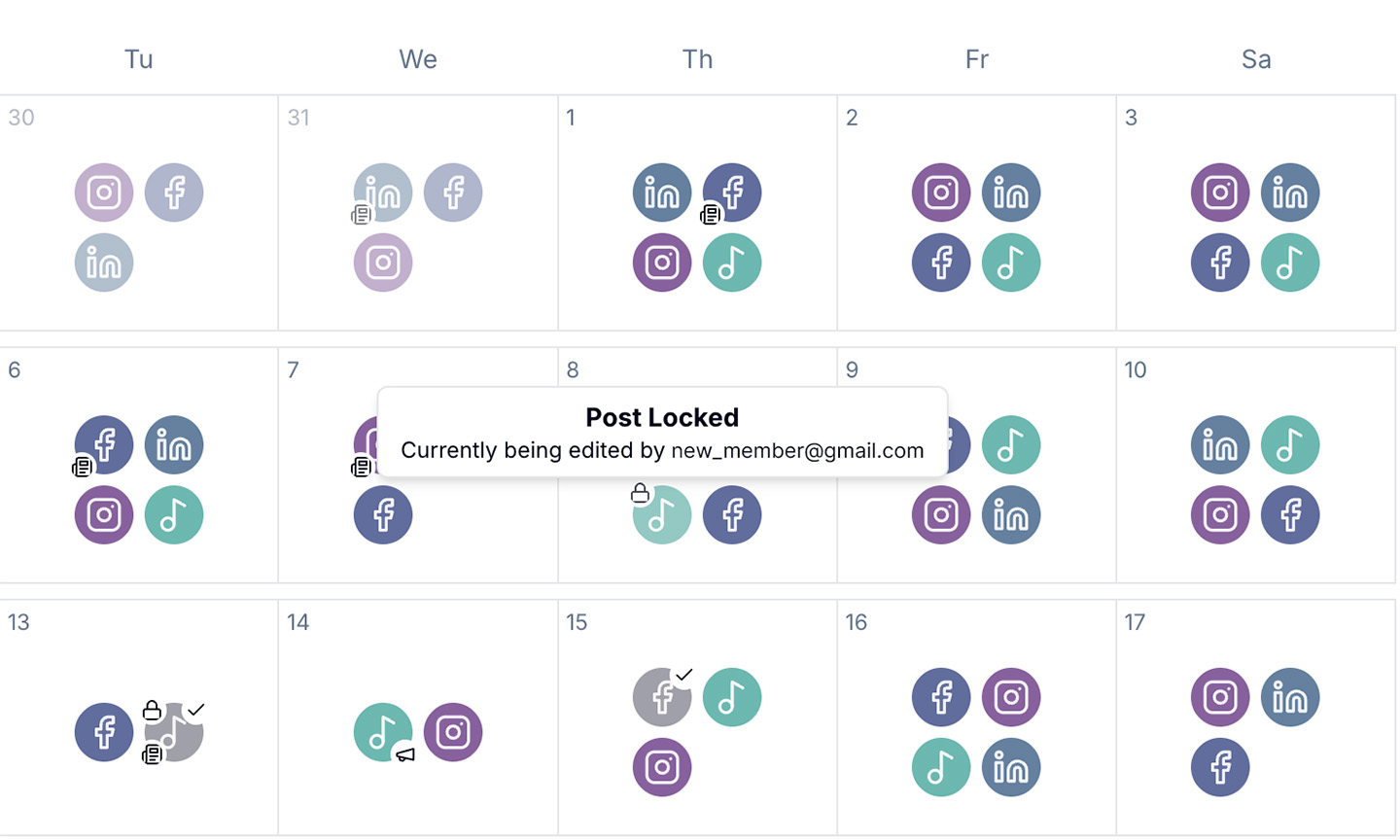
Collaboration & Content Protection
Shared Profiles
To support shared workspaces, I designed an editing lock system that prevents simultaneous conflicts. When one user opens a post, it becomes temporarily locked to other collaborators.
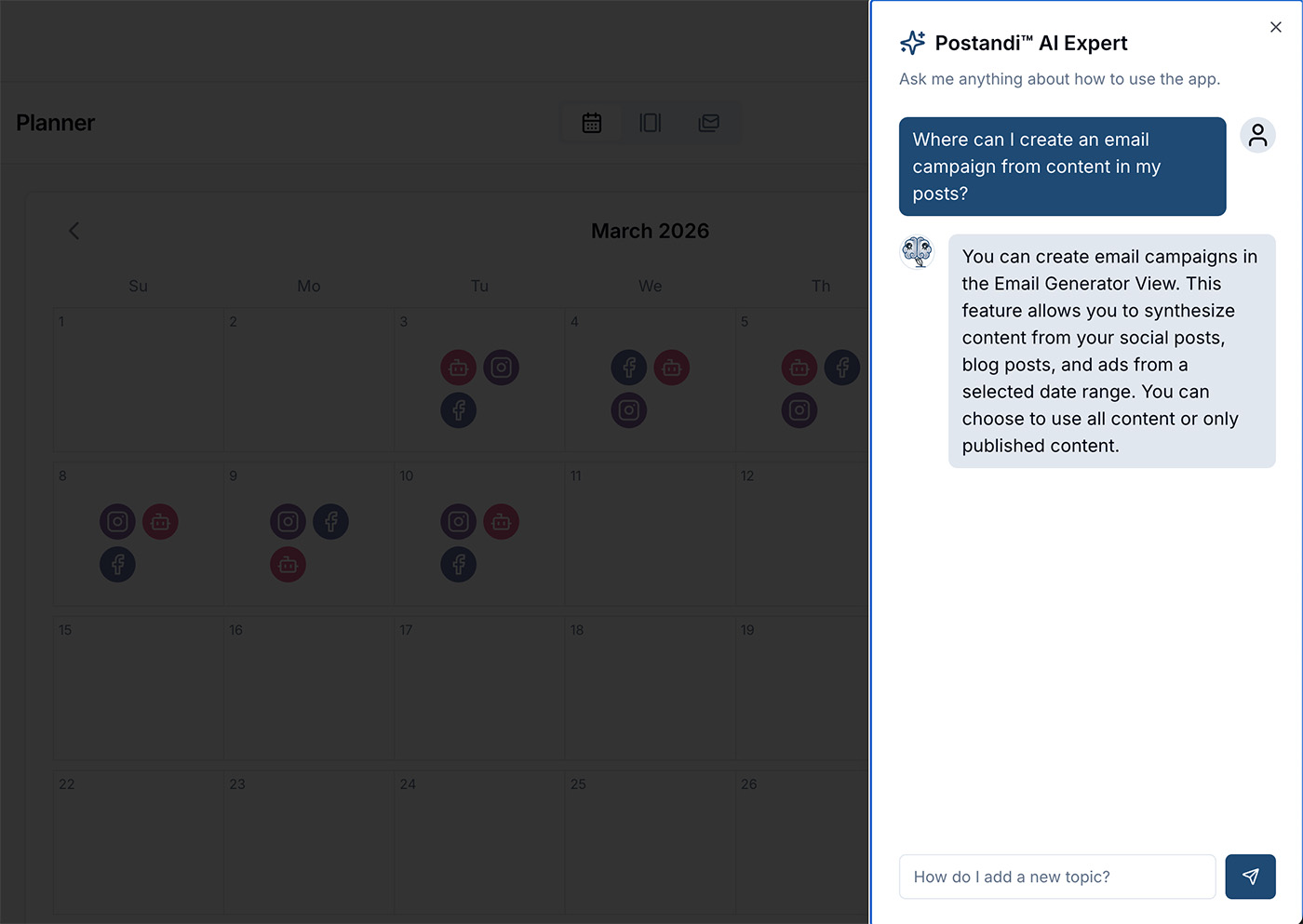
Embedded AI Support Assistant
I also designed an in-app AI assistant that helps users navigate features, locate content, and understand workflows. The assistant is intentionally constrained to product knowledge to prevent hallucinations and maintain predictable behavior.
AI Assistant
Implementation Approach
Firebase authentication and real-time data syncing
Front-end state management for Planner and Timeline views
AI-assisted prototyping workflows
Responsive UI behavior across desktop and mobile
Challenges & Tradeoffs
Balancing Power and Simplicity
Several features were simplified to preserve usability and avoid overwhelming first-time users.
Feature Scope Control
I intentionally prioritized planning and generation workflows before adding platform scheduling to ensure a strong foundation.